Inside: Decluttering your bookshelves can be incredibly difficult for book lovers! But just because you love to read doesn’t mean your home needs to be filled to the brim with books. These tips for how to declutter books address the root issues that stop readers from parting with books.
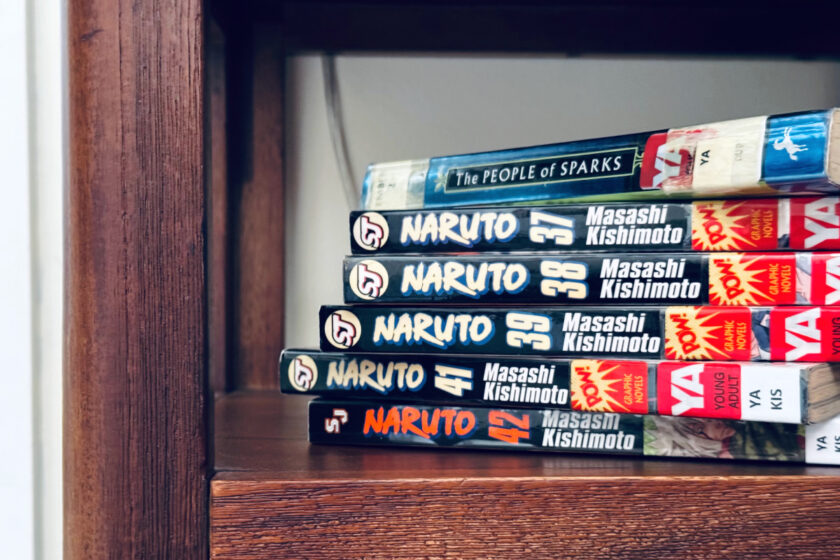
My 10-year-old is very into Japanese manga these days. They’re going through four books or more a week, so it’s a good thing the Naruto series has seventy-five books!
They recently mentioned wanting to purchase the series to keep. Not my favorite idea, since we very rarely buy books these days, but I entertained it with them for a few minutes.
I broke it down like this: “Ok, so there are seventy-five books in the series, and let’s say each one is ten dollars, you would end up spending $750 just to own the same books you could get from the library for free. Is that worth $750 to you?”
(Not to mention the space it would take up, where would they put that many books, etc.)
They ended up changing their tune pretty quickly when they heard those numbers. The need to own something goes way down when it’s your own money you’re spending.
9 Helpful Tips for Decluttering Books (When You Love to Read)
THIS POST PROBABLY CONTAINS AFFILIATE LINKS. AS AN AMAZON ASSOCIATE, I EARN FROM QUALIFYING PURCHASES. YOU CAN READ OUR FULL DISCLOSURE POLICY HERE.
Just because we rarely buy books and own way less than we used to doesn’t mean we don’t love to read!
I am almost always working my way slowly through a book or two, and my husband goes through several audiobooks a month. We read aloud to our kids, and they all enjoy reading (or listening).
But after moving several times, I realized pretty quickly how heavy books were AND how infrequently we reread the ones we owned. I also realized how much dust unread books accumulated, and how annoying it was to dust bookshelves – remove all books, wipe down shelf, replace, repeat.
Still, letting go was tough. I had built up so much of my identity and our family’s identity around owning books and having full bookshelves.
If that’s you, you’re not alone! Here are nine tips that helped me to slowly detach myself from the books we no longer needed to keep, and we were able to send them on their way to find new readers.
Related: Sorry, Homeschool Parents – I Think Marie Kondo Was Right About the Books
1. Separate your identity as a reader from needing to own a certain number of books.
For years, I kept stacks of books simply because I was a reader, and doesn’t being a reader mean you have tons of books? Not necessarily.
It sounds shocking, but you can be a reader and a book lover and not have a house filled with books.
This was HUGE for me. It helped me part with a lot of books.
2. Distinguish your actual reader self from your fantasy reader self.
Do you keep buying history tomes, when you always end up with a romantasy in your hands, instead?
Do you keep telling yourself you need to read the classics, but you genuinely cannot stand Dickens or Austen?
Do you keep books you’ve already read, even though you know that you’re not a rereader?
You need to accept the reader you actually are, not the reader you want to be.
It’s like the person that compulsively buys home gym equipment, when they really just love to walk and be in nature. That gym equipment collects dust at best, and at worst, makes them feel guilty all the time for not using it.
If you insist on pushing yourself to be a different kind of reader, try borrowing those books, instead of buying them. If you end up reading them on a consistent basis, great! If not, no harm done.
3. Keep two book lists: already read and to read.
Sometimes, we keep books because we don’t want to forget them. We know we will might want to read them again one day, or reference them, so we hang onto them, even if they collect dust for years.
Or we keep books because we want to remember to read them…sometime in the distant future, even though we have a “to read” stack a mile high before we even get to that one book we want to read someday.
Keeping books lists can help! There are apps for that, or Amazon lists (I use this for my “to read” list), or you can write them down in a journal.
Keep one list of books you’ve already read, and one list of books you want to read. This might make it easier for you to part with some of your collection.
4. Put Libby, Audible and purchased library memberships to work.
I absolutely get the need to hold a physical book in your hands. This is the only way I can enjoy reading fiction! There’s just something about turning pages.
My husband, on the other hand, loves his Kindle, reads A TON of books and subscribes to Kindle unlimited to access more of them. He also enjoys audiobooks, so he purchases library memberships to libraries in other states to access more audiobooks for far less than Audible.
(Sadly, he was just informed that his favorite library in Ohio is no longer selling memberships to out of state residents. RIP Ohio.)
Between Libby, occasional “come back to Audible” deals and our library memberships, we have very little need to purchase books to keep.
5. Ask if you or your family members will ever read this book (again or ever).
My husband only rereads books every ten years or more (once he’s forgotten the plot), so it makes no sense to him to ever buy books. Having access to more books for free or cheap via the apps and memberships listed above makes the most sense for us.
That being said, I am a rereader at heart. Books are like dear friends! So I do keep a small collection of old favorites that I reread every couple years or so.
That being said, I know that I can always get some of those books again at the library, so I hold onto fewer and fewer books as I get older.
AND if you are holding onto books you will never read again, think about how many other book lovers could benefit from you decluttering your unread books? That is motivation enough for me to part with books I will likely never read again.
6. Decide on containers and set limits for your book collection.
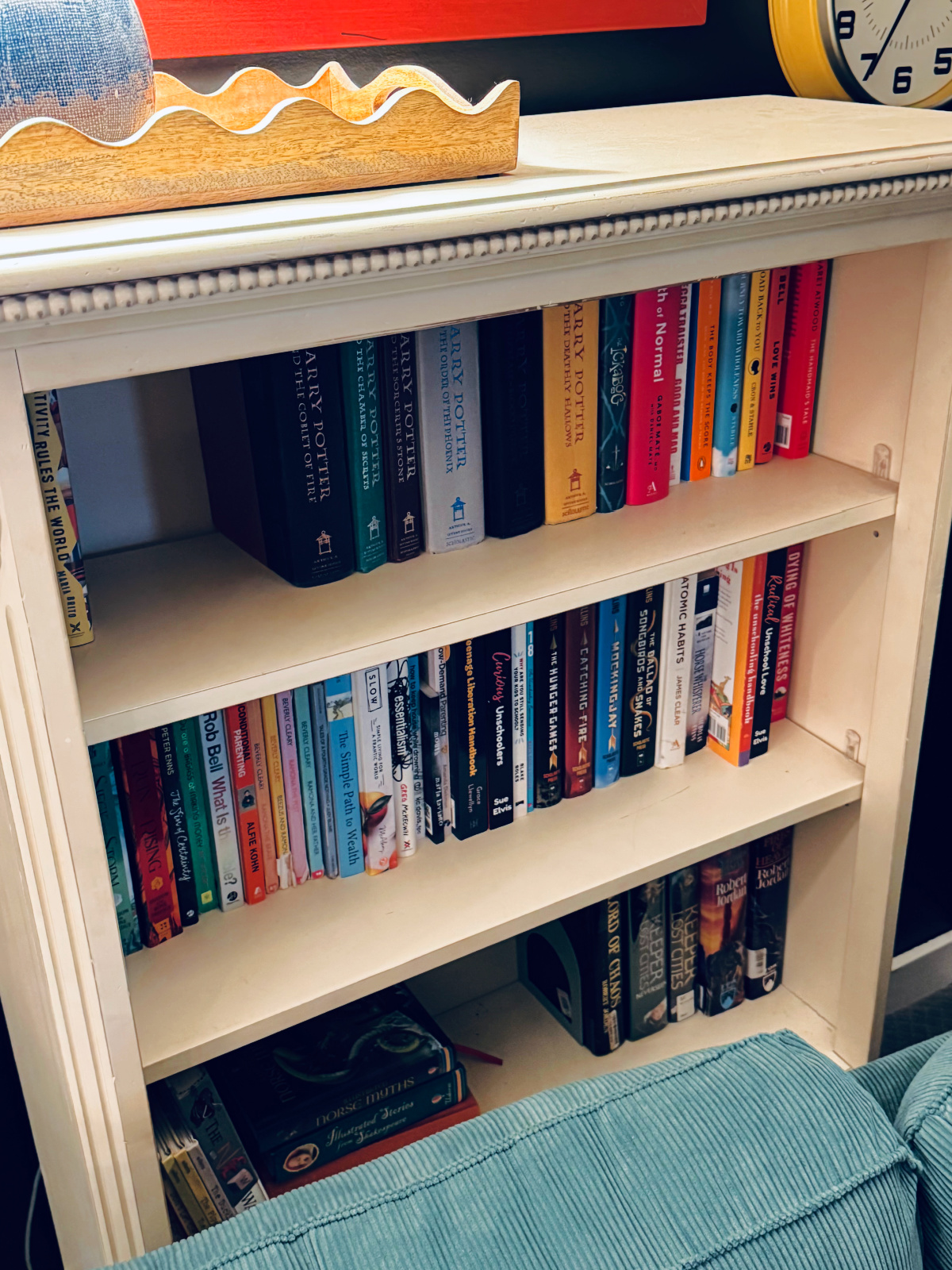
Dana K. White from A Slob Comes Clean came up with the “container” concept.
Simply put, you choose a “container”, such as a basket, a shelf or a cabinet, for one category of stuff. That “container” then becomes your natural limit for that type of stuff – in this case, books.
If you only have two bookshelves, and their sole purpose is to hold books, those are natural “containers”. If your book collection starts to exceed the two bookshelves, it’s time to declutter your books.
7. Evaluate your lifestyle, especially if you move frequently.
We have moved A LOT. And as I’m sure you know, books are heavy. They take up a lot of room, and they are a pain in the butt to move if you move frequently.
So if you’re a military family, or a frequently moving city renter, determine your book collection limits using that data.
8. Experiment with what it’s like to live with fewer books.
Uncertain you can actually get rid of a ton of books? Try packing them up for a while, instead.
Pack the books you think you want to get rid of in moving boxes and put them away for a while. See what it feels like to live with less.
After a couple of months, did you miss them? Reach for a book that was in one of the boxes? If not, you can probably donate them a box at a time, or at a pace that feels good to you.
9. Give away books you truly loved to friends and family who love reading.
Decluttering books can be hard, especially if you get really attached to your books!
Giving away books you loved, but you know you’ll never read again, to book-loving friends and family can make it a little bit easier. If they’re in good condition, you could also offer them to your local library.
Bonus Tip: Consider following the KonMari Method, and bring all your books together in one room.
This is a bit controversial since the KonMari Method can be overwhelming when you use it for every single category. But sometimes you need to see every book you own in one place to realize the magnitude of the problem.
You’ll probably say, “Wow, I didn’t realize I had this many books!” You might start boxing up the ones you haven’t looked at in five years right then and there.
Donate them to libraries, book stores, friends…anywhere BUT the AI bookmills, please.
It’s Ok to Keep Books for the Aesthetic, As Long As You’re Keeping Them with Intention
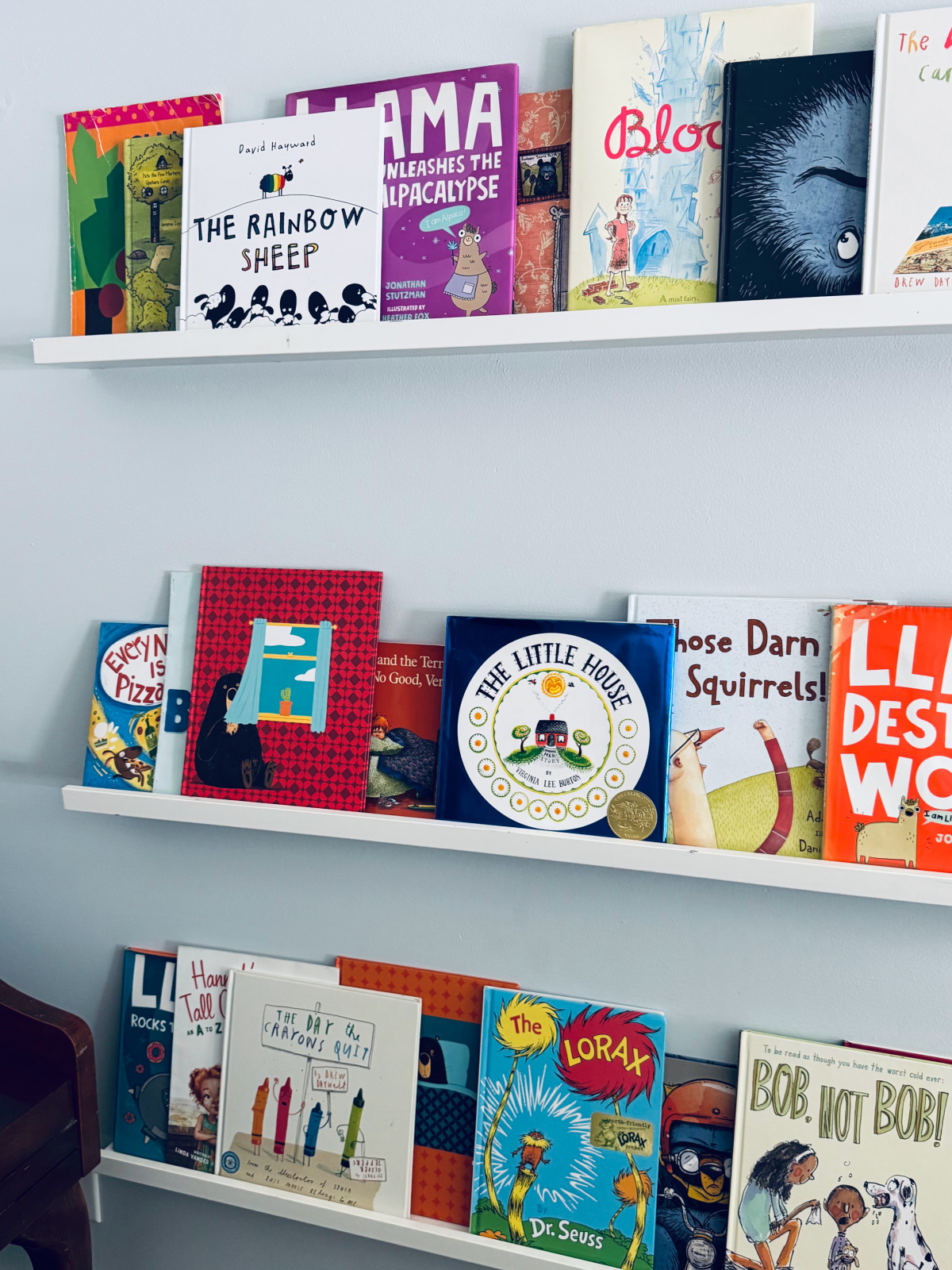
My kids recently “graduated” from picture books. While I was thankful to not be rereading the same books over and over again, I didn’t want to let all of them go. They represented decades of memories with my kids!
So I decided to declutter them down to our very favorites and display them in our “second living room” in the basement. I already had IKEA picture ledges installed.
Will I keep them forever? Probably not. But I’m keeping them for now.
Maybe you love coffee table books that just look gorgeous stacked on a shelf with a pretty bowl or flowers on top. That’s ok! If you love them: keep them.
Bottom line? If you keep books for aesthetic, keep them on purpose because they bring you joy in your home, and not because you’ve always had them.‘
You Might Also Like: 7 Marie Kondo Tips that Are Pure Genius (And a Few That Aren’t)
Keep However Many Books You Like, But Keep Them On Purpose

There is no formula for how many books you should own. There is no formula for how many books you need to declutter.
For most book lovers, Marie Kondo’s prescribed “30 books” is going to way too few!
Keep the books you love, the books that are sentimental to you, the ones you will read again and the ones you think are just gorgeous. As long as you have the space to store them safely, go for it.
That being said, we only have so much time on earth to read. And one day, you’ll be gone and someone else will have to go through your book collection and decide what to do with all those books. Your bookshelves will be decluttered for you.
Especially if you’re getting up there in years, think about the time family members will have to spend going through your book collection and deciding what to do with them. You can remove some of that burden by deciding now what books to part with (if this is you, borrow The Gentle Art of Swedish Death Cleaning from the library ASAP).
So how many books should you keep and how many books should you declutter? My book loving friend, that’s entirely up to you.
Read Next: Maximalist Child, Minimalist Parent? The Advice I Wish I’d Had