Inside: Wondering if unschooling reading really works? I can confirm that yes, it does work. Here’s what I’ve learned in the process of helping five children learn how to read on their terms.
Last week, my youngest confided in me, “Mom, I’m bored. I want to do something, but I don’t know what to do.”
(Keep in mind that this is a child with the option of unlimited screen time.)
I replied with absolutely no pressure, “Do you want to work on reading again? When you can read, you’ll have more options of things to do.”
To be clear, this wasn’t something I suggested out of the blue. I’d noticed over the past month or so that she was recognizing more words, sounding them out. Maybe everything was finally starting to “click”?
To my surprise, she took me up on it – with the stipulation that we NOT under any circumstances use the simple reading curriculum I’d used with two of my other kids.
“Those books are soooo boring, mom,” she said.
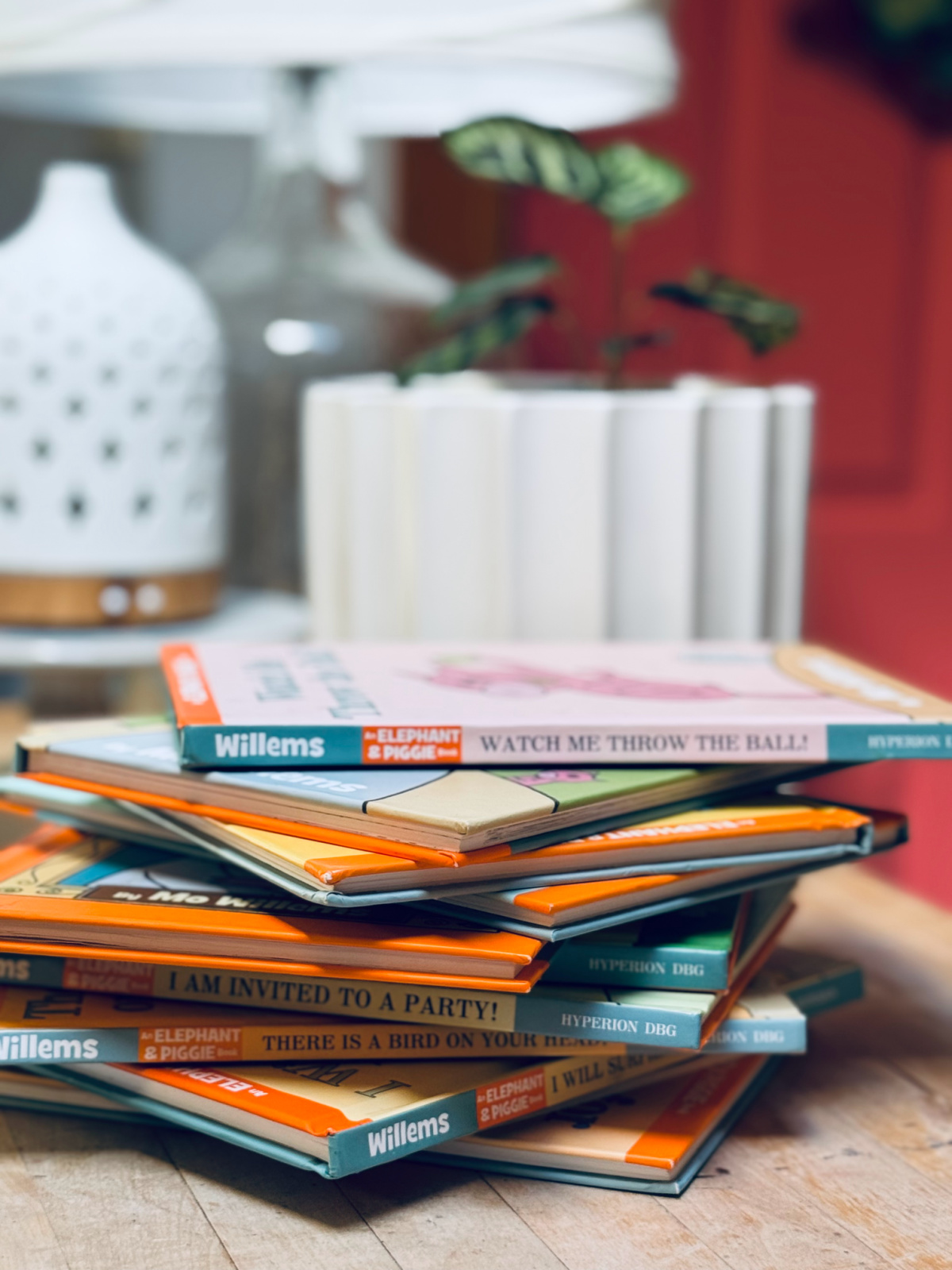
So I headed to the bookshelf and pulled out a giant stack of Elephant and Piggie books (THESE are my favorites), and we dove in.
Did she need help with some words? Sure. But compared to several months ago, she was now remembering them. The pieces were falling into place like pieces in a puzzle.
She asked to read book after book after book. And I found her later that night on the couch with a stack of books, reading silently to herself with her finger to the page, carefully reading each word.
My last kid was reading. Unschooling reading really “worked”.
Unschooling Reading Works: 5 Anecdotal, But Reassuring Observations from a Mom of Five Unschooled Readers
THIS POST PROBABLY CONTAINS AFFILIATE LINKS. AS AN AMAZON ASSOCIATE, I EARN FROM QUALIFYING PURCHASES. YOU CAN READ OUR FULL DISCLOSURE POLICY HERE.
I think most of us can agree that learning to read is the most crucial skill your child needs to acquire. If they know how to read, they can learn anything they want to – the sky’s the limit.
But what if they don’t?
That fear keeps many unschooling parents awake at night, wondering, when will my child reach that crucial milestone of “reading”? And will they really reach it without me pushing them?
At the heart of the fear is the question: does unschooling reading actually work? My unequivocal answer is that yes, it does work*. You don’t need to push or prod – your kids will learn how to read. But how, you ask? That’s why I’m writing this.
Before I jump in, my qualifications are 1) reading endless unschooling books and articles and listening to endless unschooling podcasts, and 2) supporting my own five almost-always unschooled children in learning how to read.
I do have a master’s of education, but it’s in guidance counseling, not reading. Do with that information what you will, but I’ve heard several teachers turned unschoolers say that their teaching degrees were not applicable whatsoever to self-directed education.
So without further ado, here’s what I’ve learned after almost eleven years of supporting five unschooled children in their journeys to literacy.
*A Crucial Exception: if your child has dyslexia, it will be a lot more challenging to learn how to read, and they will likely need a more structured curriculum (see this list). My personal rule was to seek an evaluation for dyslexia if they didn’t learn to read by age nine.
You Might Also Like: Unschooling Language Arts – A Guide for the Elementary Years
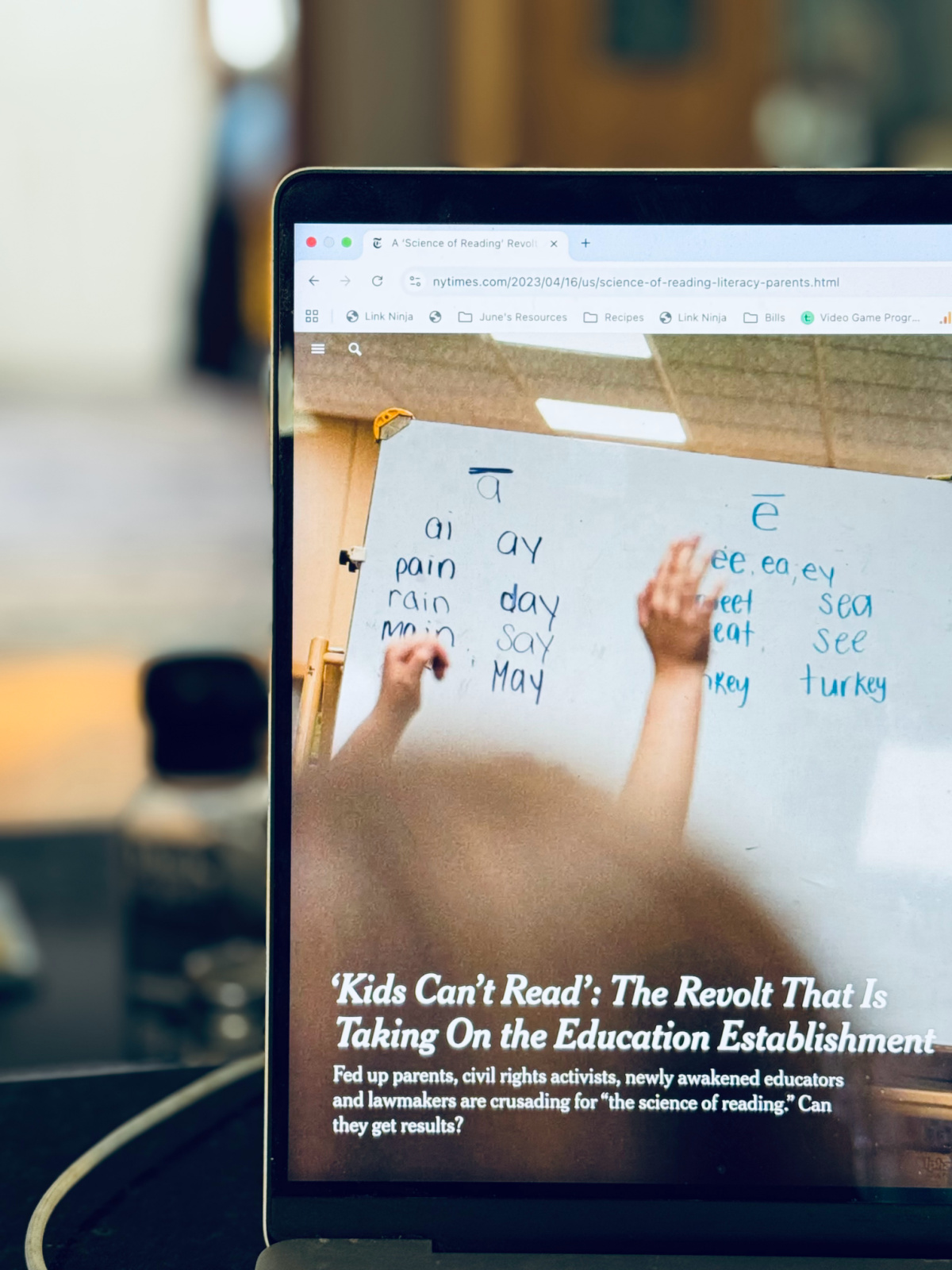
1. Almost all of the research on how humans learn how to read was conducted on children who are forced (key word) to learn how to read at a specified age in a specific way, with the underlying assumption that children wouldn’t learn to read otherwise.
Collecting data on human learning based on children’s behavior in school is like collecting data on killer whales based on their behavior at Sea World.” – Carol Black, A Thousand Rivers
Schooled children learn how to read on a cookie cutter timeline that everyone is supposed to follow without deviation, whether they want to or not. There is no choice.
Unschooled children are not confined to these timelines, and they could care less about the “best method” for learning how to read.
Who cares about phonics v. whole language when you’re not in school? Who cares whether you learned to read at age four or age nine, so long as you eventually learn and become fluent?
Unschooled kids have a choice both in the when AND in the how of learning to read. And from what I’ve read about other unschooled kids learning how to read and what I’ve observed in my own kids, choice makes all the difference.
And quite honestly? I’m not worried about whether or not reading is a difficult skill, or whether or not it’s different from learning how to walk or understand language. From everything I’ve seen, learning to read can be a natural process in our literacy-based society, despite educators saying it’s not natural at all.
I’ve heard educators argue that because reading is such a difficult skill, children need to learn using this one supposedly superior method (in 2025, it’s phonics). But I also know that they’re studying reading to try to make reading education more effective for a whole class full of children, so they can craft a curriculum that works better for a whole class full of children.
The beauty of unschooling is the freedom to see only the child in front of you and figure out what works best for that one child.
So when well-meaning educators question your unschooling approach to reading, try not to let it get to you. In my experience, the science of mass compulsory education doesn’t always (or even usually?) apply to individualized self-directed education.
You Might Also Like: This Teacher Chose to Unschool – Here’s Why She Left Formal Educaiton Behind
2. When kids are allowed to learn to read in whatever manner they choose, the process is rarely linear.
Schooled children usually learn how to read in a very linear, prescribed manner.
They start with simple, monosyllabic words. Learn short ‘a’ words first, then short ‘e’ words,” etc. etc. Or I suppose, if they learned how to read during the whole language trend, they might follow a different prescribed path based on that theory.
Unschooled kids don’t need to follow a path. They can jump all over, learning how to read four syllable words before they can read what some consider basic “beginner” words.
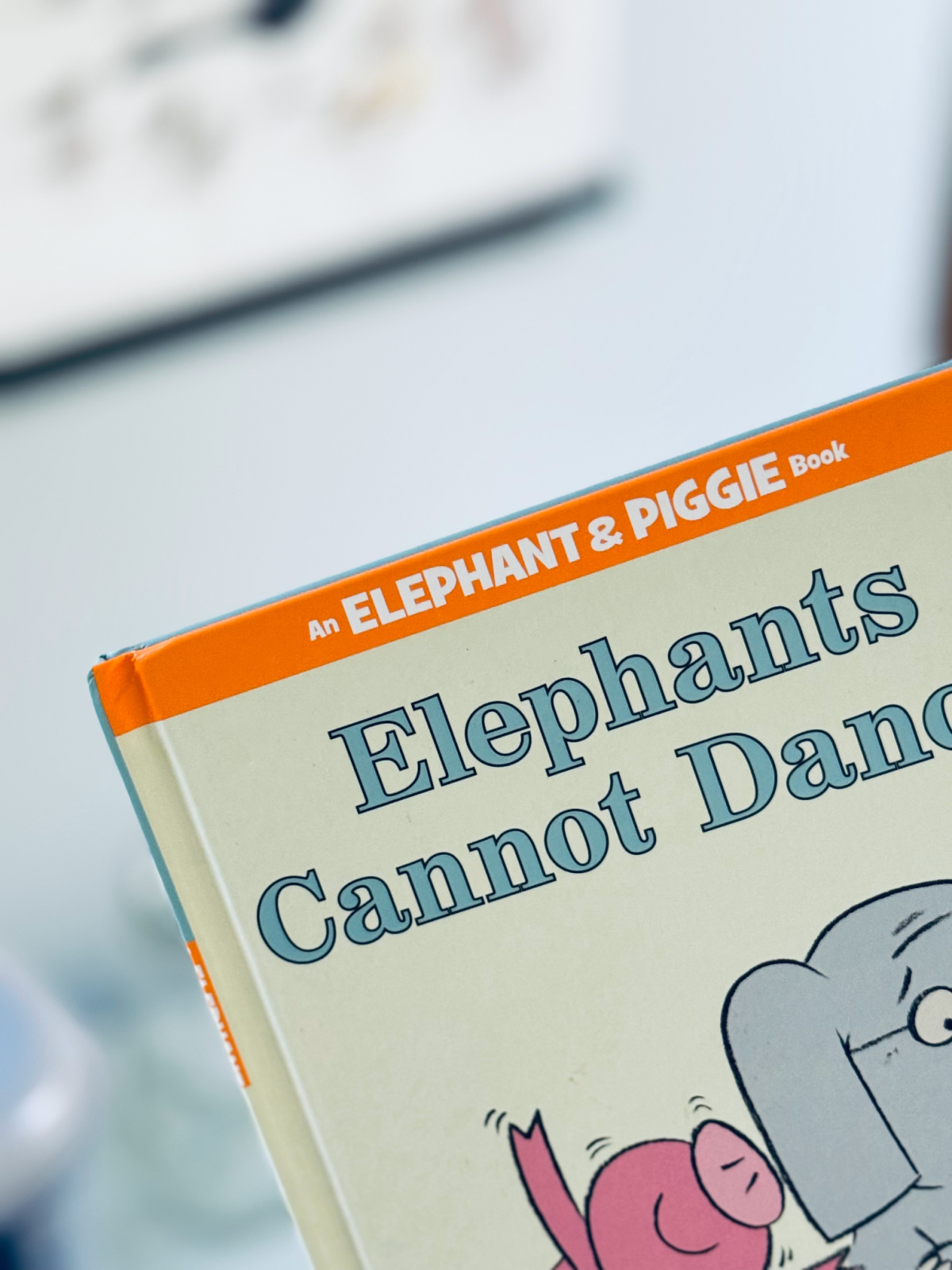
For instance, they can learn to read the word “elephant” simply because they love elephants before they can consistently read a supposedly simpler word like “cat”.
Much like potty training, who cares if one kid stopped and started for a year and the other trained themself in two days? They’re not in diapers anymore, and that’s all that matters.
It doesn’t ultimately matter because at the end of the day, once they reach fluency, no one really cares how they learned. They won’t ask in their college interviews – promise.
Related: Learning to Read Is a Natural Process – If You’re Willing to Be Patient
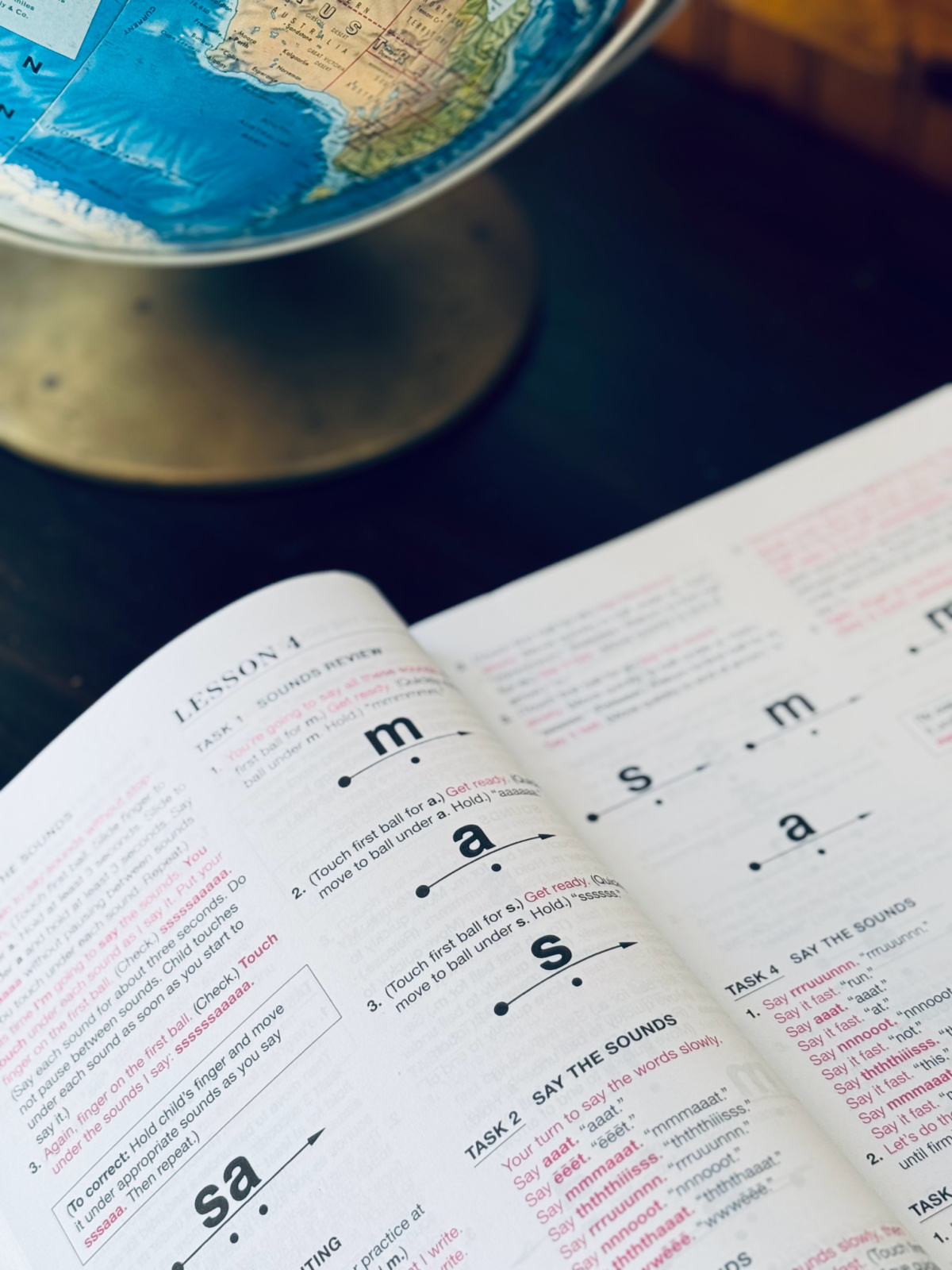
3. The “reading wars” – phonics v. whole language don’t really matter in unschooling. The method that makes most sense to your child is the only thing that matters.
Yesterday, my youngest asked me, “Mom, why does the letter ‘C’ make an ‘s’ sound in the word ‘ice’? Doesn’t ‘C’ say ‘K’?”
I tell her that often, when ‘C’ is in the middle of a word, it makes a ‘s’ sound…but then I remember all the words in English where ‘C’ is at the beginning of a word and it makes an ‘s’ sound. Words like “city” and “cent”, and then there’s the words where the typical pattern is completely flipped, like “circus” and “cycle”.
You can’t be deeply involved in helping a child learn how to read without noticing very quickly how often English breaks the rules. And then your kids ask, “Well then, what’s the point in learning the rules when they get broken all the time?”
And you say, “Ummmm, yeah. I can’t give you a good reason.”
When you have daily conversations about words and sounds and spelling, you realize that English is kind of ridiculous. Teaching a bunch of rules only to have them get broken the next second, well, it seems pointless.
Some homeschoolers claim there’s a bunch of logic to it all (they promote The Logic of English curriculum), and I say that’s great, but I don’t really care. I just care that my kids learn how to read in the way that makes the most sense to them.
I’ve had three kids for whom phonics made a lot of sense. They “sound out” words, and it certainly makes decoding new words a whole lot easier.
But I had one kid in particular who completely rejected phonics. as in flat out hated it when I would show him how to sound out words. He embraced whole language like the awesome little rebel that he is, and it worked for him.
Another kid learned to read in ways that are a complete mystery to me. I did next to zero instruction, and one day he started reading a sentence off my screen.
Speaking of the kid who mysteriously wakes up one day and knows how to read…
4. The unschooling phenomenon of learning how to read “without any help” is a bit misleading. I can almost guarantee they had “help”, but a more subtle, behind-the-scenes kind of help.
One day, my fourth child – around 7 ½ years old at the time – started reading full sentences off my computer screen. He learned how to read without any direct instruction at all.
Well, I take it back: when he turned 6-years-old, he asked to learn how to read. So I did exactly two lessons from THIS book series. It was not sticking at all. He couldn’t even recognize the word “cat” after several times through. He asked to stop – his brain was clearly not ready to learn.
Does that count as direction instruction? You tell me.
But what so many unschooling parents fail to share when they say their kid woke up reading one day is all the little things they did to create an environment that supported and promoted literacy development.
So what did I do to support his reading journey? Looking back, I did a lot, it turns out. Things like…
- Turning on subtitles on Youtube and Netflix and every other .
- Reading to him every night since he was tiny.
- Taking the kids to the library weekly almost without fail.
- Reading in front of him (my husband, as well).
- Commenting on letter sounds and occasionally sounding out words.
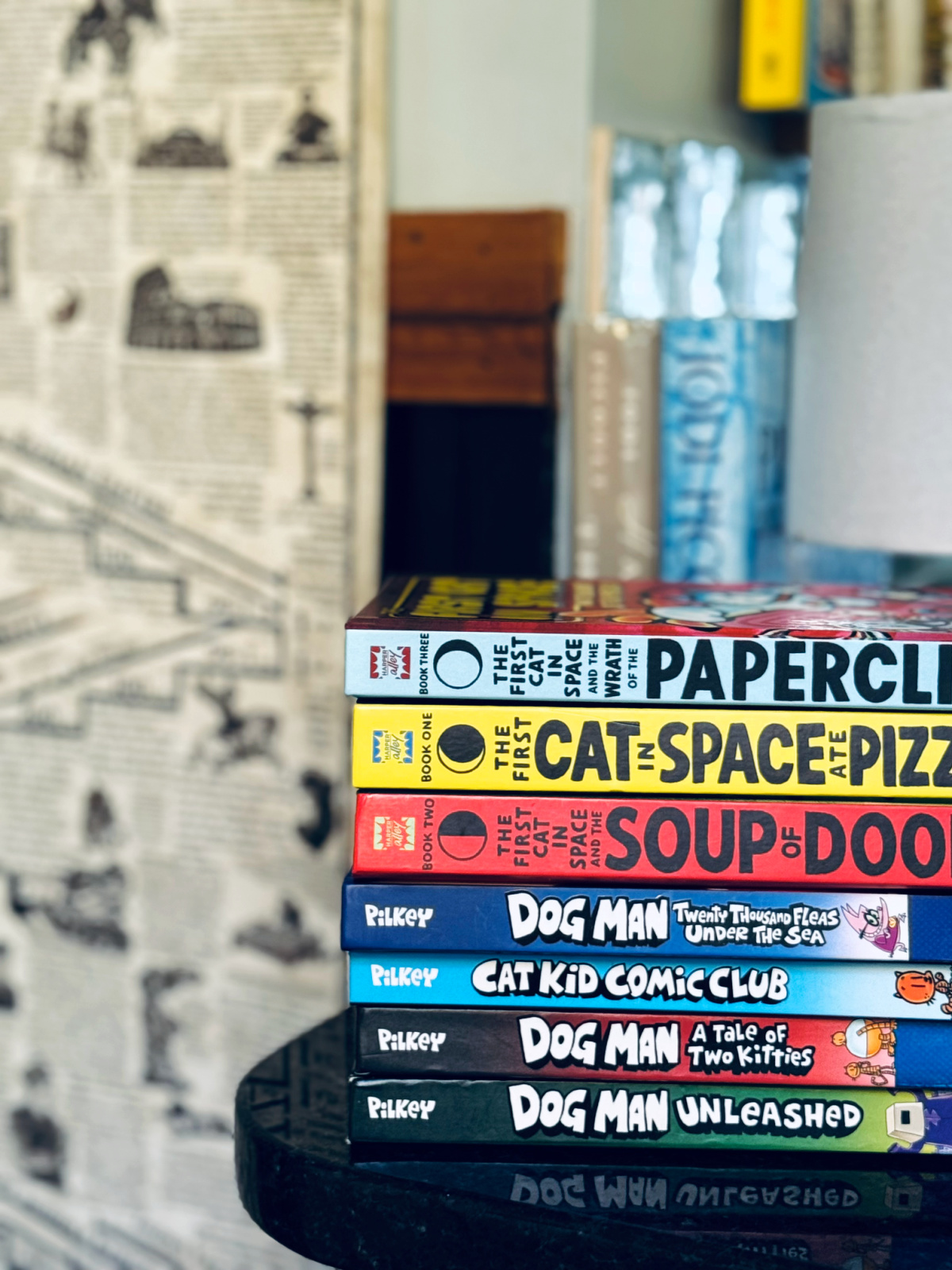
- Reading the Dog Man series over and over again at his request, putting my fingers underneath the words at his insistence for several months.
- Helping him learn Dutch in Duolingo.
- Answering any questions about “What does this say?” in a straightforward manner, without requiring him to sound it out.
- Not pushing him to learn how to read, but trusting he would learn when he was ready.
Eventually – cumulatively – all of these things added up to literacy. To this day, I still couldn’t tell you whether or not this child used phonics or whole language, though it seems to be the latter?
I’m pretty sure he didn’t even know himself when he became a reader because when that day when he read the sentence off my computer screen out loud, I asked him in surprise, “Wait. You can read now??” And said, “Yeah, I guess I can.”
But the point, I guess, is that most unschooled kids don’t grow up in a vacuum: they usually grow up in a home surrounded by readers and reading. Unschooled parents are supporting their children’s literacy journey far more than they probably realize.
5. If your child asks to learn how to read, you can use a reading curriculum and still be unschooling.
In some unschooling circles, “curriculum” is like a dirty word. But curriculum is just another tool.
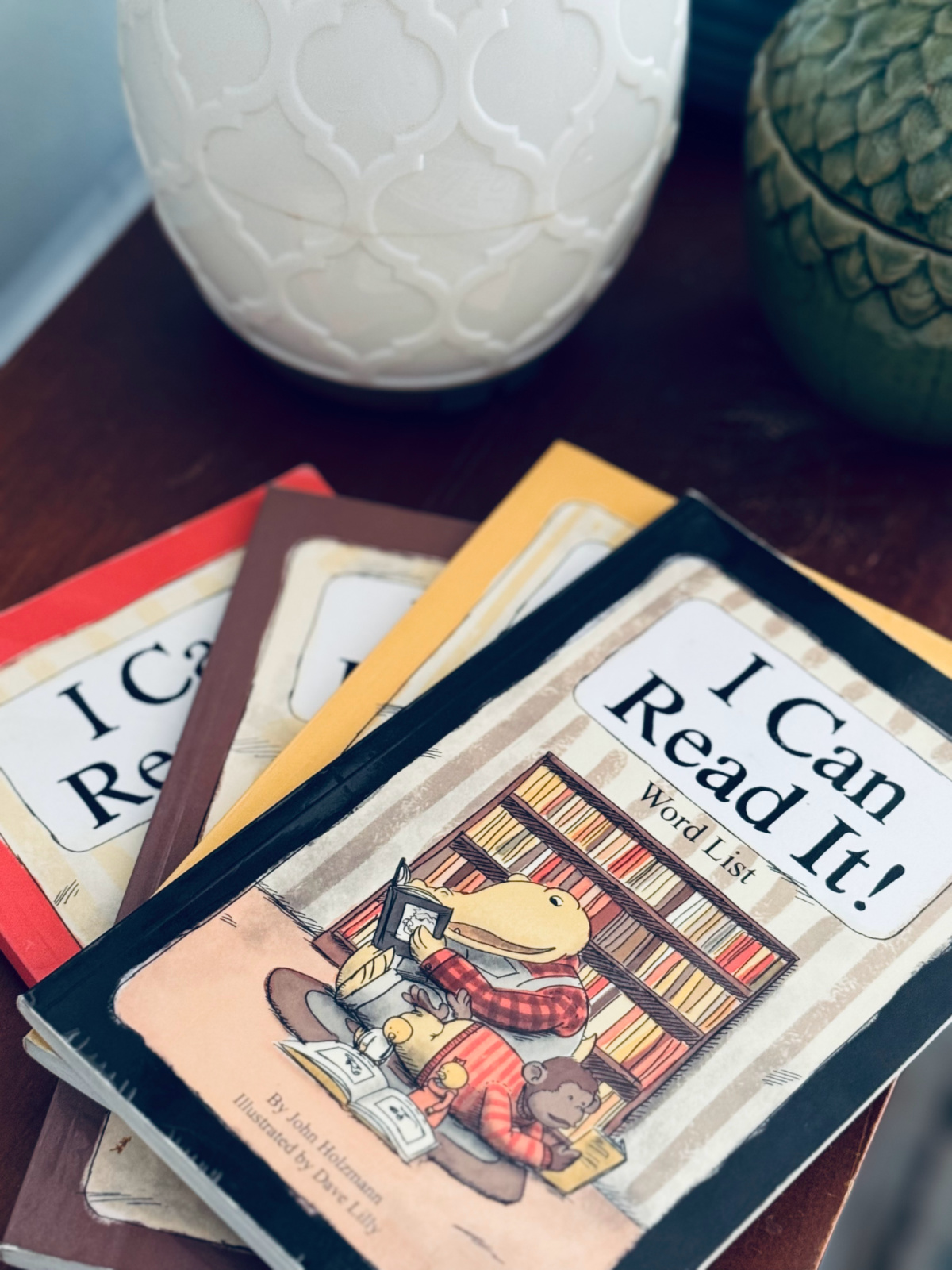
Two of my five kids worked their way through THIS simple reading curriculum with me. It was part of their process.
Afterwards, they took two different paths. With one kid, I suggested he read out loud Dog Man to me for a while. The other asked to stop all formal reading lessons, and he improved by reading and asking for help when he needed it.
Both are fluent readers today…but so is their sibling who didn’t use any curriculum at all.
If your child is actively asking to learn how to read, by all means, grab a curriculum! See if it’s a good fit.
You might go through a few lessons (my youngest quit after Lesson 9 in THIS book) and set it down. You might circle back to it, or you might not. It’s honestly part of the trial and error process of individualized education.
I will say that unless you end up having a child with dyslexia or another learning disability, you probably don’t need an expensive curriculum.
Start with something simple and inexpensive like THIS book or THESE books and go from there. And again, only if your child is actively asking to learn how to read or takes you up on suggesting they do.
You Might Also Like: Clear the Homeschool Clutter FAST with These Five Questions
But How, HOW Do You Unschool Reading? Where’s the Step by Step Unschooling Reading Guide?
You don’t know how much I wish I could give you a step by step guide. I spent years wishing I had one and hours searching the internet for one.
Eventually, I gave up looking for a manual. Instead, I lived life with my kids, and all I can tell you is what that looked like.
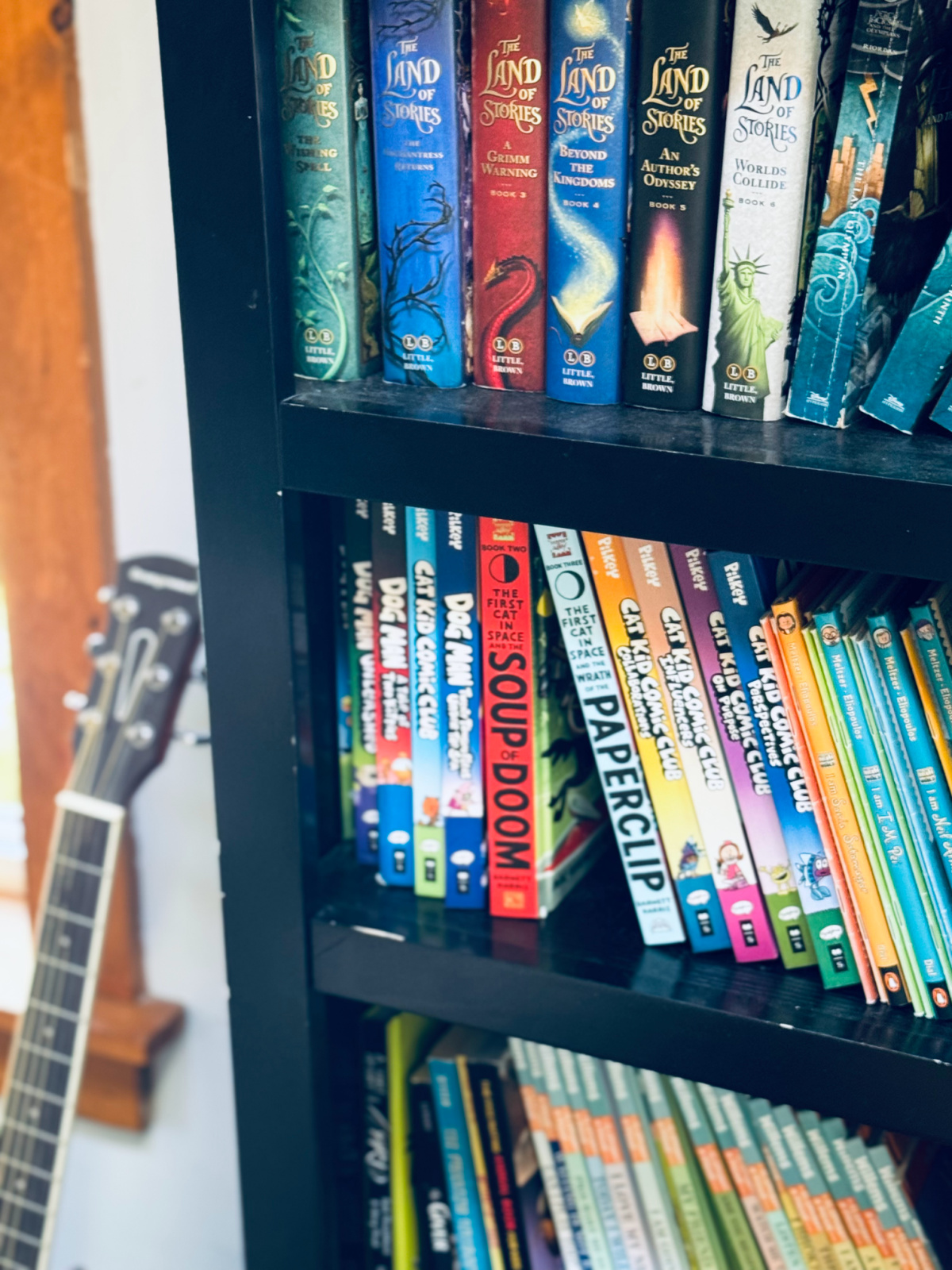
And spoiler alert: it wasn’t wall to wall, overstuffed bookshelves – because in my humble opinion, Marie Kondo was right about the books.
I took them to the library, to museums, to other events. I read them books of all kinds – fiction and non-fiction. We played all kinds of educational board games.
I put on PBS shows like Word World and when they asked, I provided the paper and pen to write down every word in every episode. Then I provided a binder to keep those papers in so they could reread the various words later on.
When they asked what a word said, I read it to them, no questions asked, although I did occasionally sound it out for them – if, of course, it could be sounded out. Once again, English is silly.
When they asked me to spell a word so they could write it down, I spelled it. Again, no “sound it out” or “how do you think it’s spelled”, just simply spelled it.
I stuck religiously to my nighttime “read before bed” routine, no matter how tired I was. I read chapter books aloud to them until they asked to be done.
And when they asked for help with reading, I helped in whatever way made the most sense to that child. If they asked to stop, we stopped. If they asked for more help, I gave it.
My kids learned to read at various ages: 5, almost 8, 6, 7.5 and 6.5 respectively. I always said that if they hit age 9, and they wanted to learn to read but got stuck, I would investigate learning disabilities just to be thorough. But I never had to use this personal “rule”.
My best advice? Pay close attention to the child(ren) in front of you. Support their interests with whatever resources you have at your disposal. Respect their “no’s”. And trust that they will learn to read in their own time, and in their own way.
That’s it. That’s as much of a “step by step guide” that I’ve got.
As a new-to-unschooling mom, what I needed most were articles like this one, from unschooling parents whose unschooled kids learned how to read (and reached fluency) without going to school or without top-down “you must learn to read NOW” methods.
I needed those stories. I bookmarked them and reread them over and over again on the days when my doubts were really really loud.
So this is that – my gift to you. Remember: you’ve got this!
Got questions about unschooling reading? I’d love to answer them! Drop them in the comments.
Read Next: 7 Tips for Unschooling WITH Anxiety (When Deschooling Isn’t Enough)