Inside: You CAN declutter on a low income, but the typical minimalist decluttering guides fall short in more ways than one. This is the advice I would give my past, low income self for a more positive – and sustainable – decluttering experience.
Once upon a time, we were super duper broke. We had student loan payments of $700-800 a month. We were living on my partner’s small pastor’s income on free state health insurance, and eventually WIC.
Somewhere in the middle of all that, I discovered minimalism.
My undiagnosed AuDHD self was desperately wondering why I was so absolutely overwhelmed all the time by all the stuff that comes with three kids – soon to be four – and my “keep everything: it might be useful” partner. Why couldn’t I keep it together?!
I tried to organize it, to tidy it, but the sheer volume kept me running around everywhere all the time to the point of exhaustion.
That’s when I picked up Marie Kondo’s book The Life-Changing Magic of Tidying Up.
After finishing the last page, I closed the book and promptly went on a decluttering bender. I got rid of bags and bags and bags of stuff. So.much.stuff.
I felt SO much better…except that I eventually realized we really didn’t have the money to cover my decluttering oopsies or the now gaping hole in my closet.
Sorry, Marie, not all of us have new pajama money. FYI: some of us must spend that money on clothes that are acceptable to wear outside the house, and they may or may not be from the thrift store.
I do not regret discovering minimalism. But I DO regret not having the right tools to declutter responsibly on a low income.
That’s what I want to give to you.
You Might Also Like: 7 Best Books About Minimalism and Simple Living
7 Tips for Decluttering on a Low Income (When the “Just Get Rid of It, Already” Advice Hits Different)
THIS POST PROBABLY CONTAINS AFFILIATE LINKS. AS AN AMAZON ASSOCIATE, I EARN FROM QUALIFYING PURCHASES. YOU CAN READ OUR FULL DISCLOSURE POLICY HERE.
Sooo many decluttering guides are written by middle to upper class people.
Now there’s nothing wrong with those guides. Or with being middle to upper class (we’re now solidly in the middle class, rapidly disintegrating though it is).
The problem is those guides aren’t a good fit for people who are decluttering on a low income. When you’re low income, living paycheck to paycheck, those rules don’t always apply to you.
You need a different guide, a different set of tips. This is that.
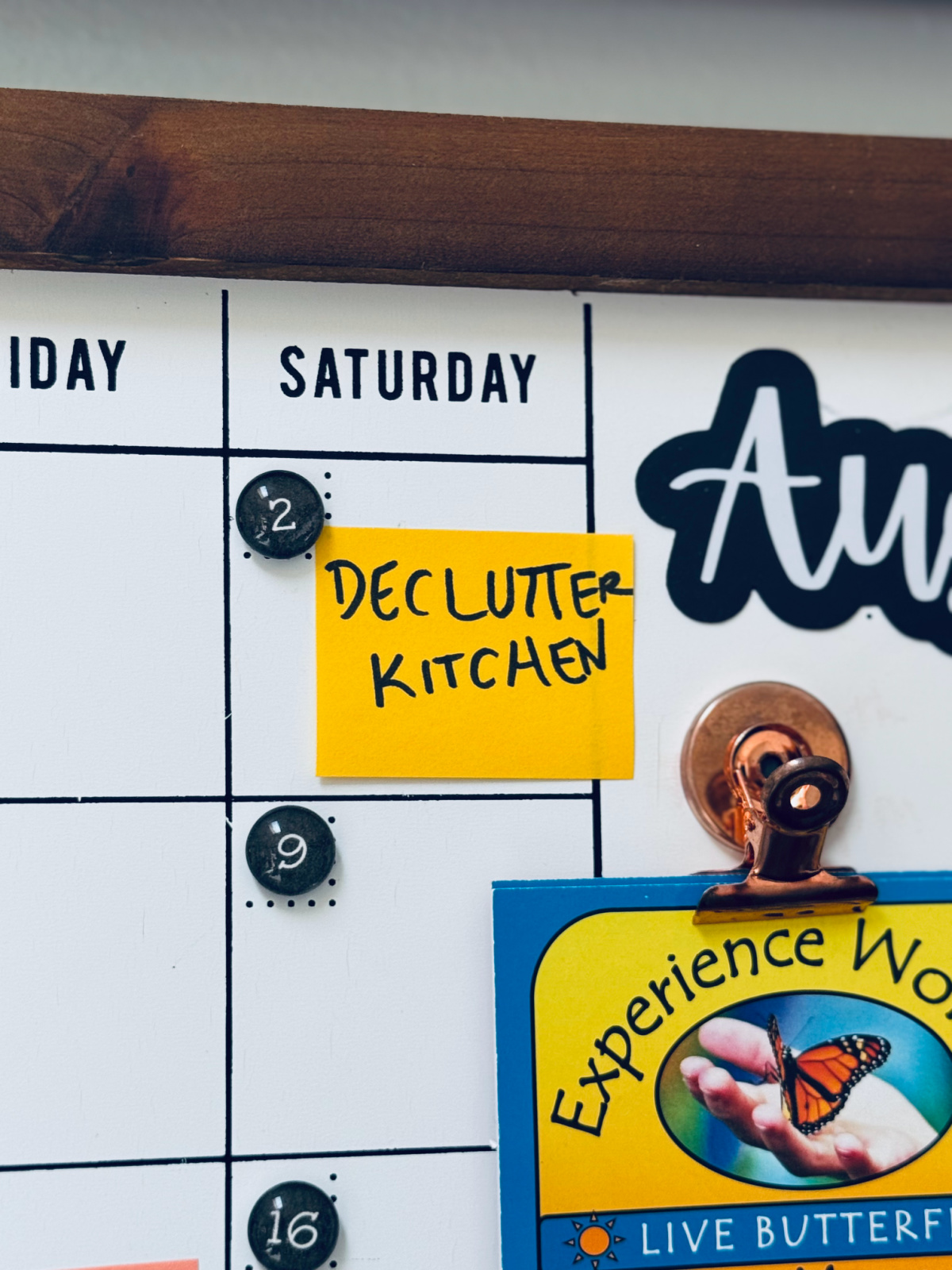
1. Start, even though it’s hard.
I don’t know where you’re coming from.
Life experiences like poverty, unemployment, great loss – all of these things shape your perspective on all the things
I believe my house burning down as a child actually helped me in the decluttering process. I’m not sure if it was that exact experience that made me this way, but I am the extreme opposite of sentimental.
As opposed to my daughter who cries for twenty minutes about something we threw away a year ago, I willingly toss anything not tied down. I’ve actually had to rein in my purging tendencies with four little kids in the house.
More on Minimalism with Kids:
- How to Declutter with a Sentimental Child
- The Biggest Mistake You Can Make When Decluttering With Kids
- The Cost of Minimalism
That being said, if you’ve lived through multiple cycles of unemployment, you might view the stuff in your home as your only asset. It might be extremely hard to part with some of it.
I get that. So, start small.
It’s for this very reason that I recommend starting in the bathroom. It’s the easiest room to declutter and will give you the momentum you need to keep going.
Just start.
Related: The Best Place to Start Decluttering (when you’re to overwhelmed to start)

2. Do not use the question, “Does it bring me joy?”
I read a post last month about getting out of debt on a low income.
The author made a confession that hit me hard:
We finally let go of the entitled belief that anyone who earned a college degree could get married, buy a house, have 2 kids, and otherwise afford a comfortable middle class lifestyle.
Shannon of Growing Slower
(Read her full post on how to pay off debt on a low income HERE – it’s fantastic.)
Were we living a lifestyle that didn’t match our income? At times, yes.
My husband and I both have college degrees. In our culture of “you deserve this”, it’s easy to feel entitled to a lifestyle that doesn’t match our income level.
In my opinion, the question “Does it bring my joy?” is a middle to upper class question. Now that we’re doing better financially, I ask that question more…but rarely in decluttering (I’m way too practical for that).
It won’t help you right now, though.
When we decluttered, there was a lot left in our house that didn’t bring me joy. I’m thankful to not be in that place today. We’ve “graduated” to being able to afford some IKEA furniture we like (even that, we got on Craigslist, instead of brand new).
If you get rid of everything that doesn’t bring you joy, your house might be pretty darn empty by the time you’re finished. You will probably also have a serious decluttering regret hangover.
More helpful questions for decluttering on a low income are:
- “Is it useful? Do I really need this?”
- “Can I afford to replace this next month if I actually need it?”
- “Do I have another tool or item in my house that serves the same purpose?”
Related: 7 Decluttering Questions to Use Instead of, “Does it Spark Joy?”
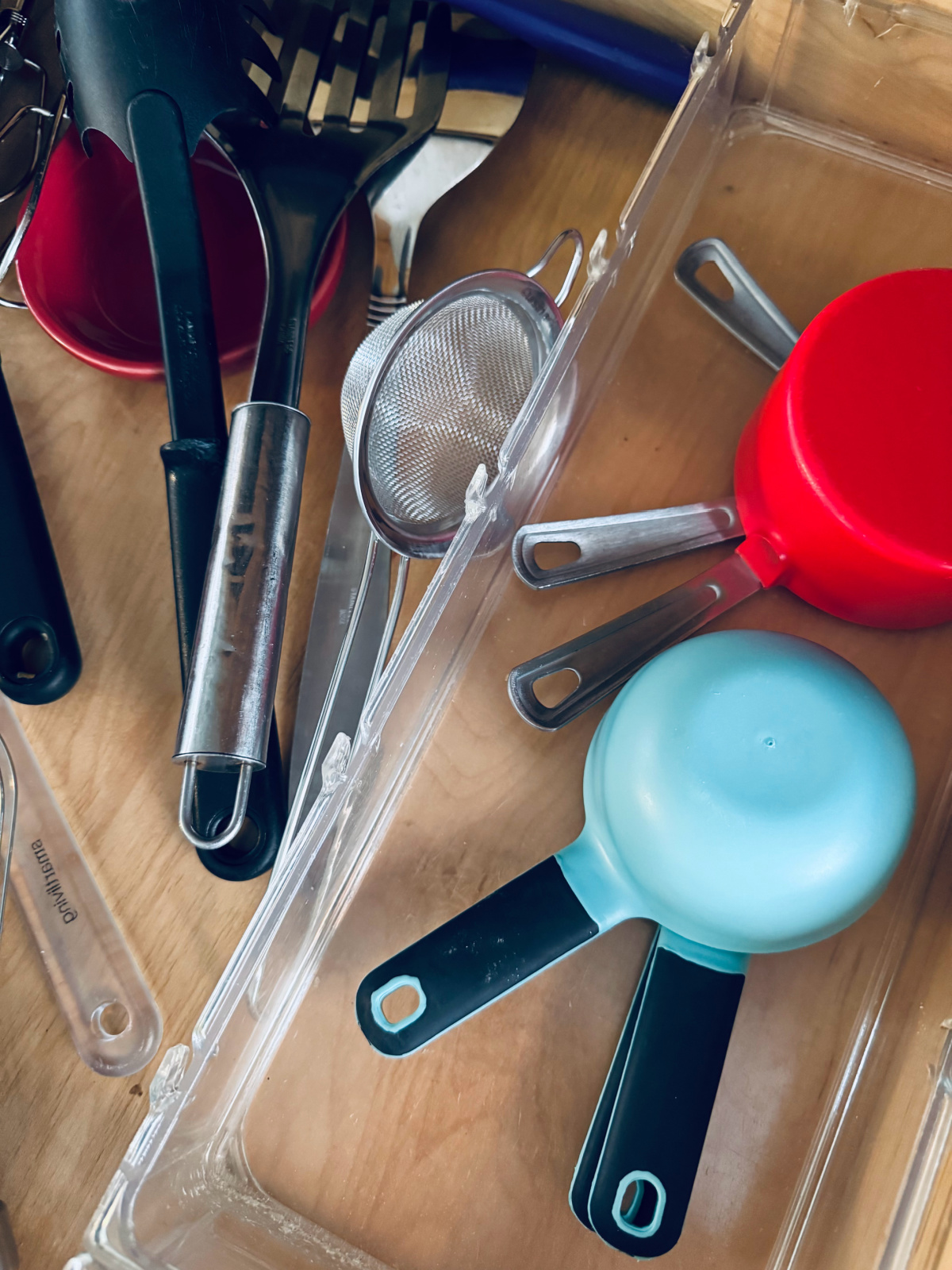
3. Keep duplicates, in moderation.
“Get rid of all duplicates.” This is classic decluttering advice that you need to skip right past.
If you have ten chargers for two devices, you probably don’t need them all. But you might keep four, or even six – double what your average minimalist would recommend.
I once gave away extra pyrex dishes, forgetting that we have kids who accidentally break things.
Two of the four we had left broke shortly after. Oi.
You need to evaluate how easy and affordable it is to replace an item if it does break:
- Do you have good thrift stores in your area ? (not everyone does)
- Is Freecycle alive and well where you live?
- Do you have a “Buy Nothing” group you can join on Facebook?
If you can easily replace it for very little, you can safely get rid of some duplicates. If not, and you have the storage space, have a storage bin just for duplicates.
Related: 7 Duplicates I Refuse to Declutter (Even Though I’m a Minimalist)
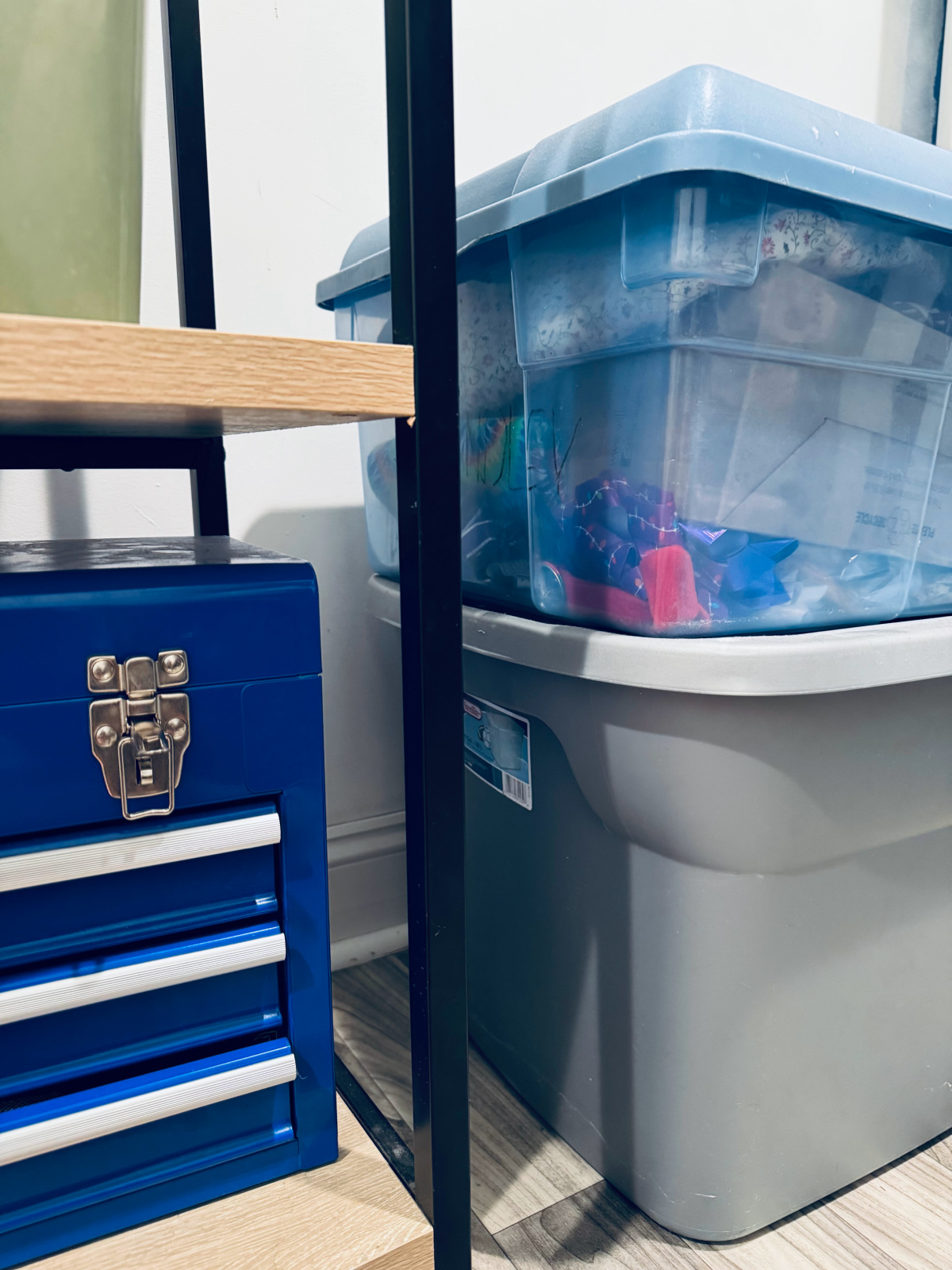
4. Have a box (or 2 or 3) for things you aren’t sure you’ll need, but you very well might.
You might be wary of decluttering, and understandably so.
Just like me, you may have gotten rid of “clutter” in the past, only to realize a month later that you actually needed what you gave away. And oh yeah, you don’t really have money to replace it.
That’s why you are really going to need a box (or a couple of boxes) to store the things you aren’t sure about, the stuff you think you might need later.
Label the box with today’s date.
That date will help you know with certainty six months or even a year later that you really didn’t need those things.
If you have the storage space, I recommend a year because then you can fully cycle through all the seasonal items (holidays, weather changes, etc.). When those holidays and seasons come and go without needing anything from the box, you will be able to confidently give those things away.

5. Don’t feel pressured to get rid of all your stuff.
I’ve read A LOT of decluttering posts and multiple books on minimalism. When you’re done reading them, you pretty much want to throw away/give away everything you own.
The pressure to get rid of stuff is tangible. It jumps off the page at you.
That felt pressure is part of why I got rid of things I regretted later. That pressure is probably helpful for someone on a higher income who can afford to replace something they get rid of and need later.
For someone who can’t? Not helpful.
Don’t.feel.pressured.
You know your stuff. You know your income. You know your situation.
Take decluttering advice (even mine!) with a grain of salt, and decide for yourself what to keep and what to get rid of. You will find a hundred posts on Pinterest titled, “100 things you can throw away right now.”
Not one of them is absolute.
That being said, I created my own version of 100 easy things to declutter (or throw away) with lower income families in mind. Check it out – it may help you get started!

6. Take it slow.
It’s o.k. if it takes you longer to declutter. It’s not a race.
People recommend doing it in a shorter amount of time because you lose energy to finish, and sometimes clutter creeps back in.
Not finishing makes it harder to:
- Start again (Have you ever stalled out trying to lose weight and gained a few pounds back? It’s even harder to start, again).
- Experience the benefits of decluttering.
- Avoid accumulating more clutter.
Choose an end date. Post it where you will see it regularly. Stick to that date, and you’ll be just fine.
Until then, go on a shopping ban. Only buy what you actually NEED (not what jumps out at you from the Dollar Store shelf as something you could use – “could use” is different than NEED).
Finally, find an accountability partner, a friend in a similar situation. Ask them to motivate you, to remind you of your end date and your goals.
Related: How to Declutter with No Time and a Tight Budget

7. Organize what remains.
If I hear one more time, “If you have to organize your stuff, you might have too much stuff,” I’m going to scream. Whoever wrote that obviously doesn’t have a big family.
I don’t care how much stuff you have or don’t have, you still need organization.
Organization doesn’t need to be expensive. Clementine boxes, shoe boxes, and cheap dollar store bins work just as well as the pretty $20 baskets at Target.
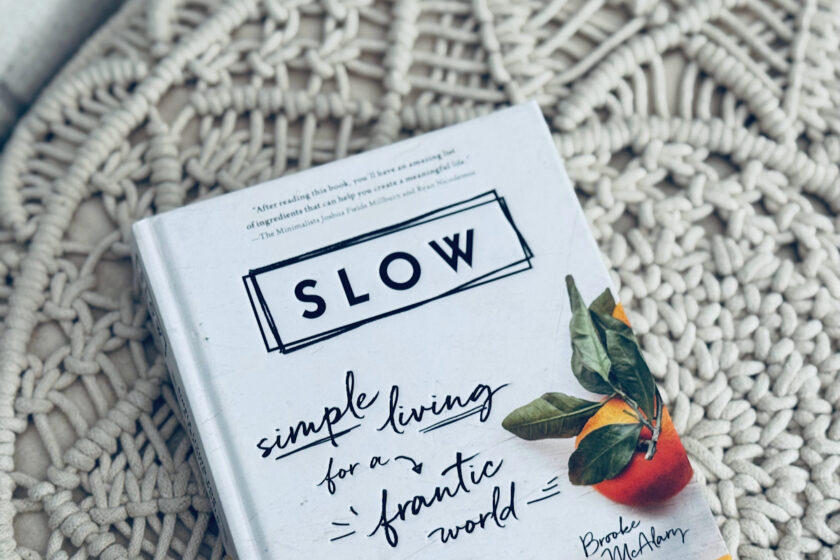
(This book has other great ideas for pretty, cheap storage!)
If you like beautiful storage containers like I do, try using a roll of wrapping paper to make your boxes beautiful, especially if they are out in the open.
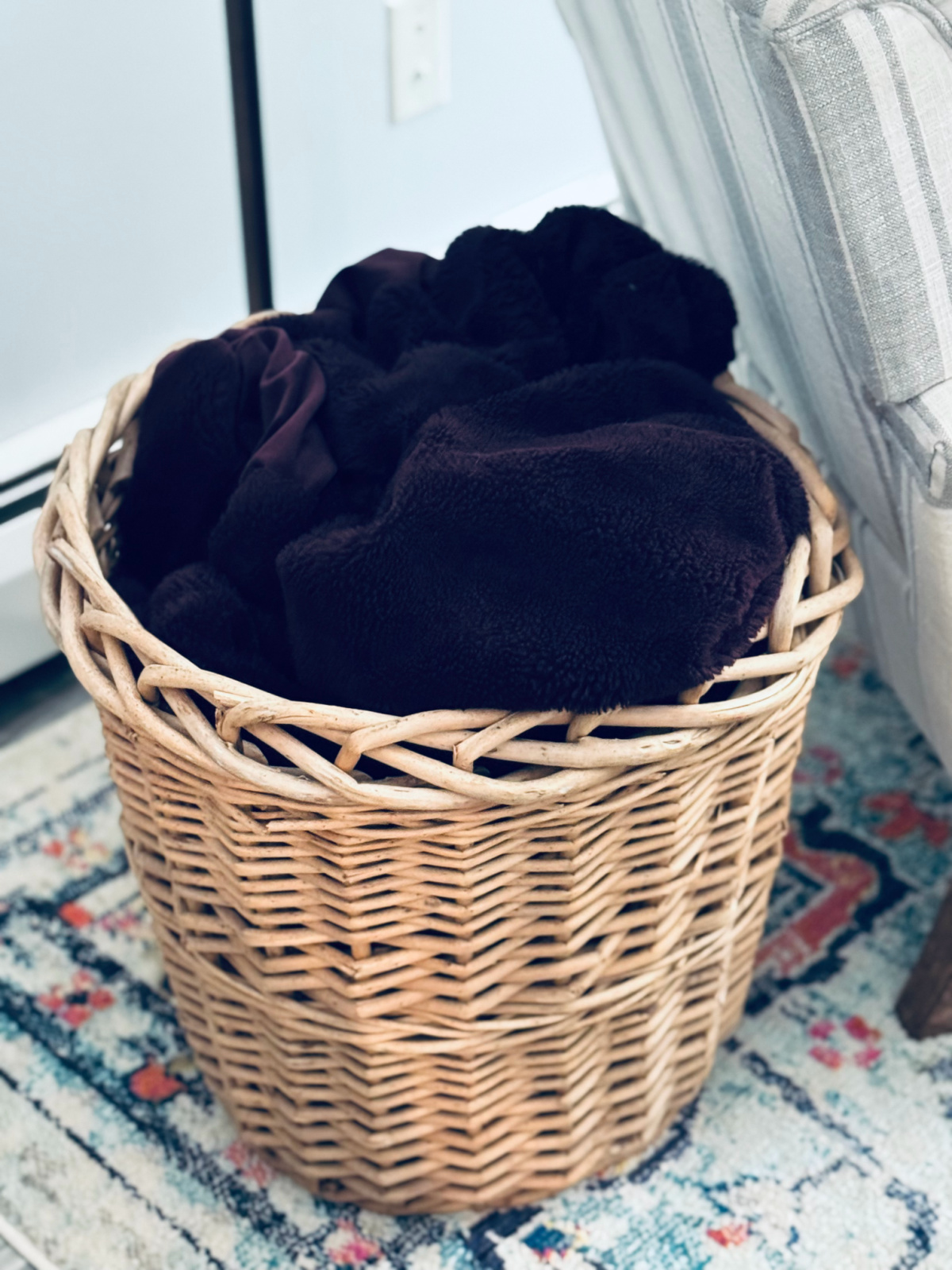
Or grab free baskets when you see them marked “free” at the end of your neighbor’s driveway, like I did this week.
Decluttering Has Something to Offer Anyone, on Any Income
We’re in a different place now financially, but most of the time, I still follow these same decluttering tips.
Ten years later, I think a lot longer and harder about what I declutter. The amount of times I think an item is done in our house, it suddenly becomes popular again.
I still have a “maybe” bin, especially for clothes, and I’ve pulled some things back out of it and returned them to my closet over the past few months.
I’ve embraced duplicates. In fact, just this week I wished for three more pairs of kitchen scissors! I’ll probably get just one extra for now, but still, there’s never a clean one when you need it (and no, I don’t want to wash it, Joshua).
There is no standard for decluttering perfection. There’s just what works for YOU, the real you who needs – and yes, sometimes wants – stuff because it makes your life better.
I still have way more breathing room than I had pre-minimalism. But there’s more wiggle room now for finding my own happy medium, for feeling comfortable in my house with my own personal standards for “enough”.
I hope you get there, too, and that these tips are a breath of fresh air in a world full of higher income minimalists.
Read Next: 5 Easy Steps to a Minimalist Pantry (No Decanting Required)